Automation
From one thing you made to a channel that runs itself
Automation on Tonta is not a switch you flip on day one. It is what a workspace earns after it has shown Tonta what “good” looks like — and the rules for when a piece is allowed to post without you looking at it first are written down, checked every cycle, and never a black box.
How it starts
You don't configure a channel. You make one thing.
There is no service picker and no wizard on day one. You describe what you want in one box, the agent works out what kind of piece that is and fills in every setting it can, and you only get asked about the handful of things that actually change the output or the price.
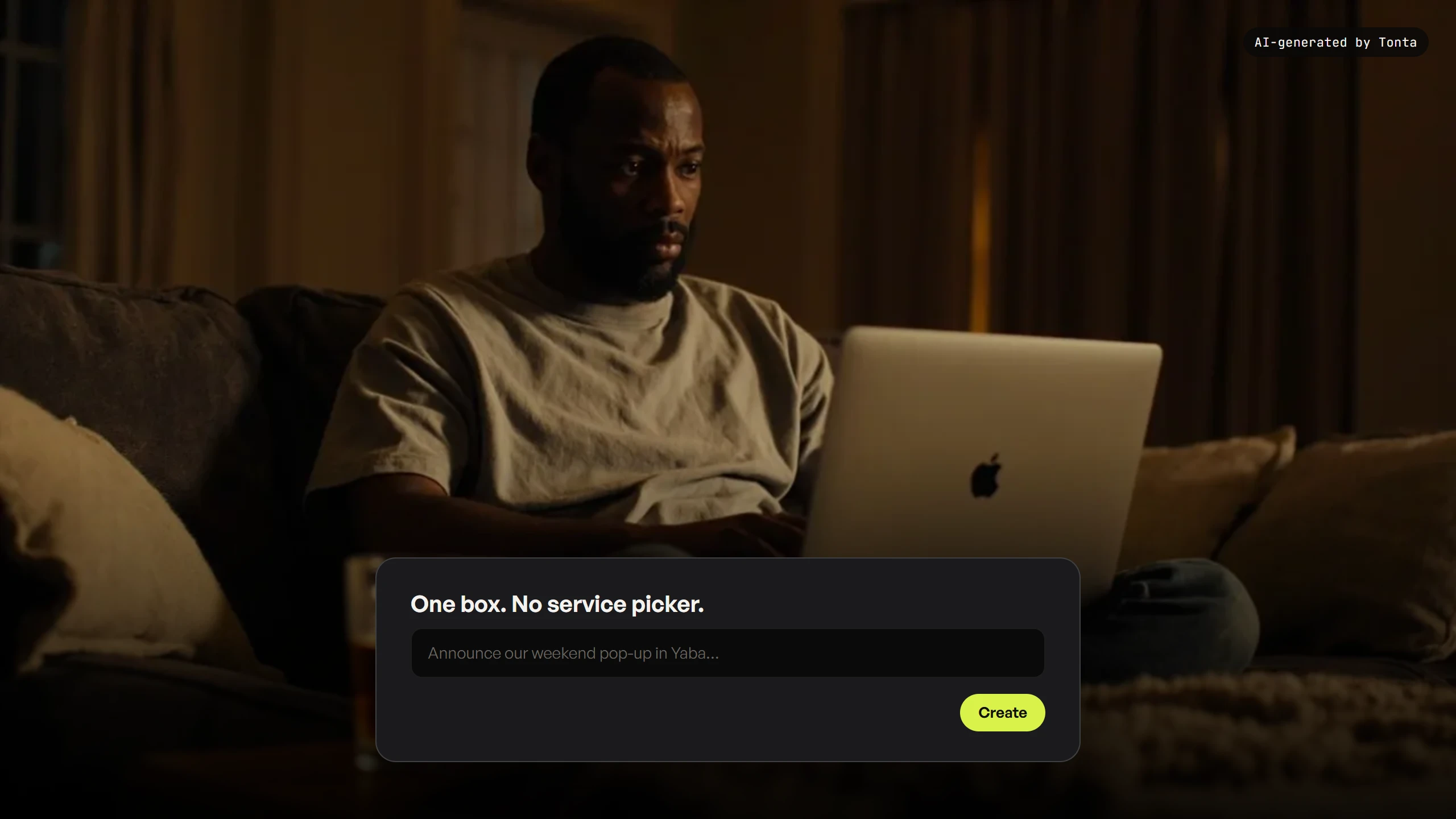
Every default is real, visible, and open to change — never a blank field you have to fill in before anything happens. You get a priced plan before anything spends, and the piece it makes runs the same pipeline and the same approval gates as a fully configured channel. It is not a smaller or cheaper version of the real thing.
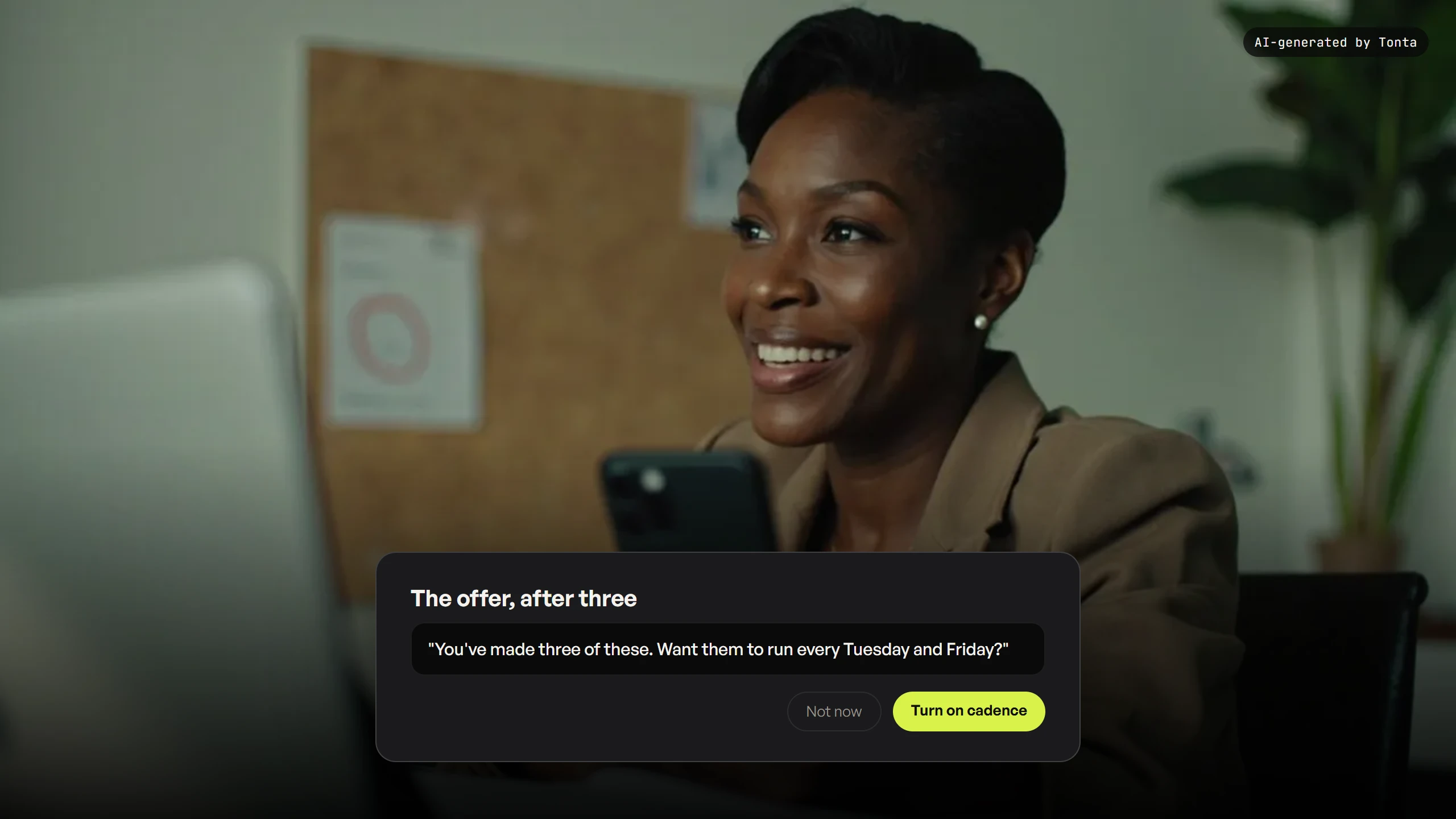
“You’ve made three of these. Want them to run every Tuesday and Friday?”
That is the actual offer, verbatim, after your third approved piece of the same kind — never before you have shown, three times, what you want. You accept with evidence, not on faith.
Saying yes is not a wizard. Every piece Create makes records the exact settings it resolved to, so graduating asks for only the difference — the rhythm and the platforms — and reuses everything else. Accepting means “keep doing that,” not starting over.
Once it's running
How often, and exactly when
A cadence never improvises its own schedule. Three things are decided upfront, in writing, before a single unattended piece goes out — so a missed slot is a choice you made in advance, not a surprise.
What still needs you
Three honest levels of trust
Unattended posting to your real account is a different kind of exposure than a more expensive feature — not a paid unlock, a risk you opt into once you've decided you trust the output. Every workspace starts at the safer end by default.
Before every cycle
What has to be true before anything runs unattended
This is checked fresh, every cycle — never a stored yes. A connection can die, a budget can run out, a goal can already be achieved, and a stored flag would still say ready. The dashboard shows any blocker with the one action that clears it.
A goal, active
Unattended work with no target is just spending.
Required knowledge present
Whatever this service can't honestly run without — a service area, a glossary, a character sheet.
Complete cadence settings
How many pieces, how often, and where — nothing left to guess.
A healthy connection per platform
Including that none of them need reconnecting.
Required references present
The four services that need one to produce a professional result — not the ones where a reference is only a nice-to-have.
A budget with a cap
No cadence runs against an unlimited number.
An approval mode, explicitly chosen
Never assumed — you picked one.
Plan entitlement for unattended publishing
The risk gate below, cleared.
Money, on a schedule
A budget that warns you before it stops you
A cap that only speaks once it hits zero has told you nothing you could act on. Tonta forecasts continuously, so it can tell you a date rather than a percentage.
What it's aiming at
A goal that fits the channel, and a feedback loop you can see
Automation isn't just repetition — it is aimed at something, and what it's aimed at depends on what you're building.
A brand channel is measured on leads and sales. An episodic series is measured on completion and how much of the audience stays to the end. A reel channel is measured on throughput and cost per piece published. The goal picker offers what actually applies to what you’re running — never a generic list of vanity numbers.
And every cycle, the plan gets a little better on its own: whichever hooks, pillars, formats and lengths actually performed get weighted into the next plan — and you’re shown why, in plain language, not left to guess whether anything is learning at all.
Start with one piece. Graduate when you’re ready.
No wizard, no service picker, and nothing runs unattended until you’ve told it to.