Localization & dubbing
Localization & dubbing
Anyone with an audience beyond one language — also the highest-margin upsell because it multiplies content you already have.
What you get
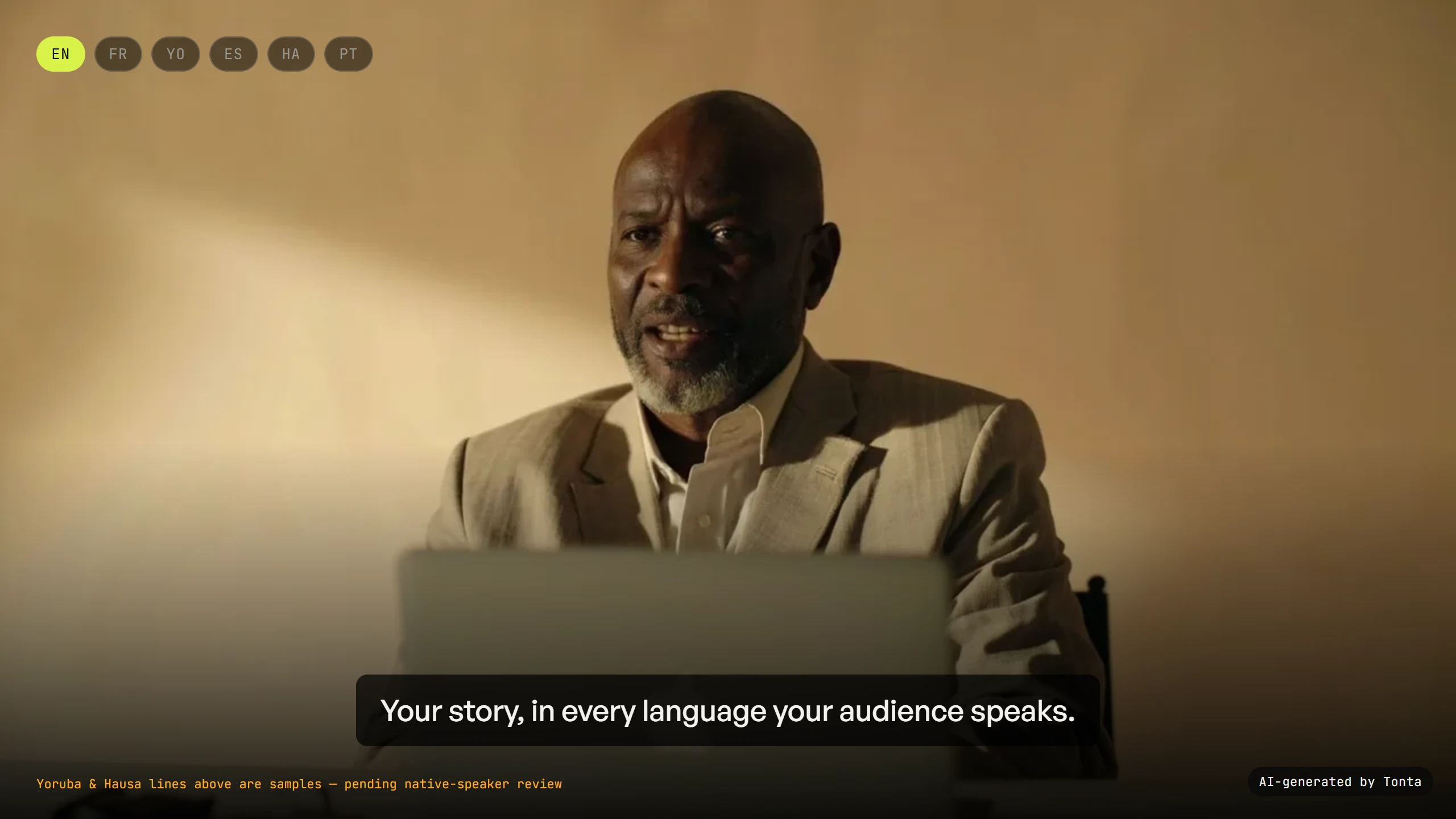
- Existing content translated and dubbed into every target locale you set
- Soft subtitles by default, with voice matching to a library voice or a cloned one
- Idioms and claims flagged automatically wherever they don't travel across a market
Multiplies content you've already made rather than producing anything new from scratch
Voice cloning only ever runs against a usable, consented reference — never assumed from a translation request alone
Local prime-time scheduling is on by default, so a dubbed piece doesn't post at the wrong hour for its market
This automation procedure states the target design honestly: the dubbing pipeline itself isn't running yet, so a localization cadence isn't live automation today.
Settings you control
Every setting below ships with a real default — never a blank. Nothing here is asked unless it’s something the agent genuinely can’t infer, or changes the output or the price.
Pricing
Priced per finished piece from your live plan — see the exact, itemised quote in Preview before anything spends. Nothing here is a static number; it's computed from your settings every time.
See a previewModels this service can use
The model roster for this service is being finalised — see the full, current lineup on the models page.
Where it publishes
Every plan reaches every platform below — tiers gate how many connections you get, never which platforms you can reach.
What runs unattended vs. needs your approval
This is the target procedure, stated honestly rather than as a live path: each cycle would read the glossary and do-not-translate list first, translate per your translation mode into every target locale, run the cloned-voice pipeline only when voiceMatching is set to cloned and gated on a usable, consented voice reference, flag untranslatable idioms via cultural review, and schedule per local prime time. Nothing spends until the source content to localize already exists.
Reference: recommended. A voice reference is required, but only when you ask for a cloned voice — the default library voice needs none.
Sample outputs


Frequently asked
Does it need a face on camera?
No — it works from your existing content's audio and video, translating and dubbing what's already there.
Do I need to provide a reference?
Only for a cloned voice — that needs a usable, consented voice reference. The default library voice needs none.
Does it publish automatically?
Auto-posting is off by default. A new workspace approves its first five pieces one at a time before anything publishes unattended, and unattended posting stays a Pro-plan-and-up feature everywhere — not because it costs more to produce, but because posting to your real account without a look is a risk decision, not a pricing one.
Is the automation live today?
Not yet as an unattended cadence — the dubbing pipeline itself is still being built. The settings and defaults above are real and already how the service is specified to behave once it lands.