How it works
What actually happens to your money.
Four stages, in order, every time. Nothing spends until it's been priced, a clear request just runs, and nothing publishes without your approval unless you have deliberately turned on automatic publishing, which a brand has to earn first.
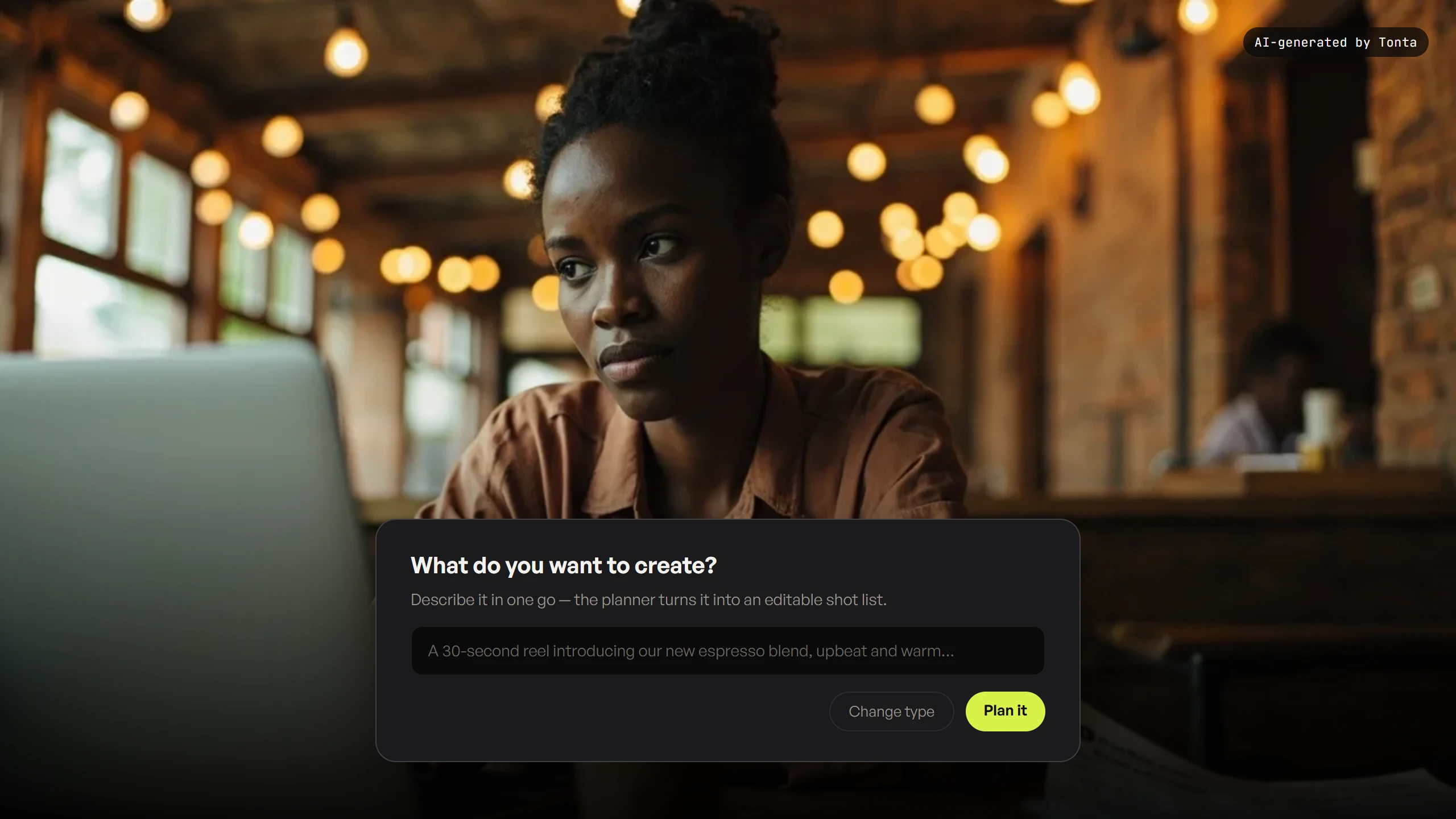
Plan
No spendThe agent reads your brief and works out what the piece is from what you asked for — its length, its shape, its look — then fills in the settings you didn't have to type, with defaults that are real and visible, never blank. It asks only what changes the output or the price. A brand's references, voice and accounts come in when your request brings that brand in, never by default.
Planning holds a small amount of credit while you look at the plan. Go ahead and its cost is part of the job's charge; walk away and the hold is released, with nothing charged for it.
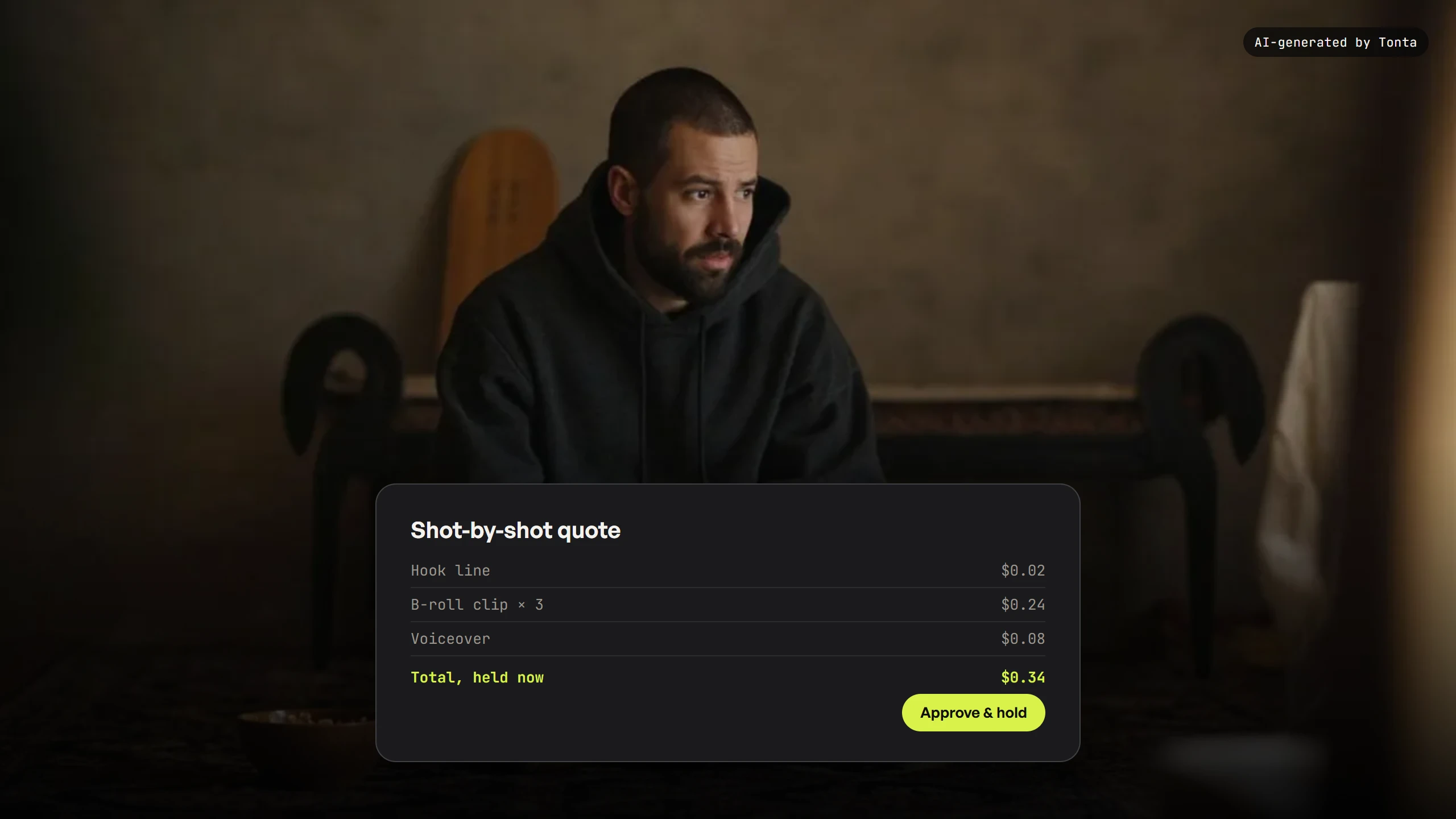
Generate
SpendsA shot-by-shot quote is priced from the live rate card before anything renders. A clear request just runs. Reviewing the plan first is opt-in, and anything above your confirmation threshold always asks you first. Credit is held when the job starts and released back if it fails or finishes under the quote. It is a hold, not a charge.
Credit is held when the job starts, or when you approve a quote above your threshold. It is genuinely consumed only as shots complete.
Every generated shot starts as a still, made first in one consistent batch; each shot is then animated from its own still.
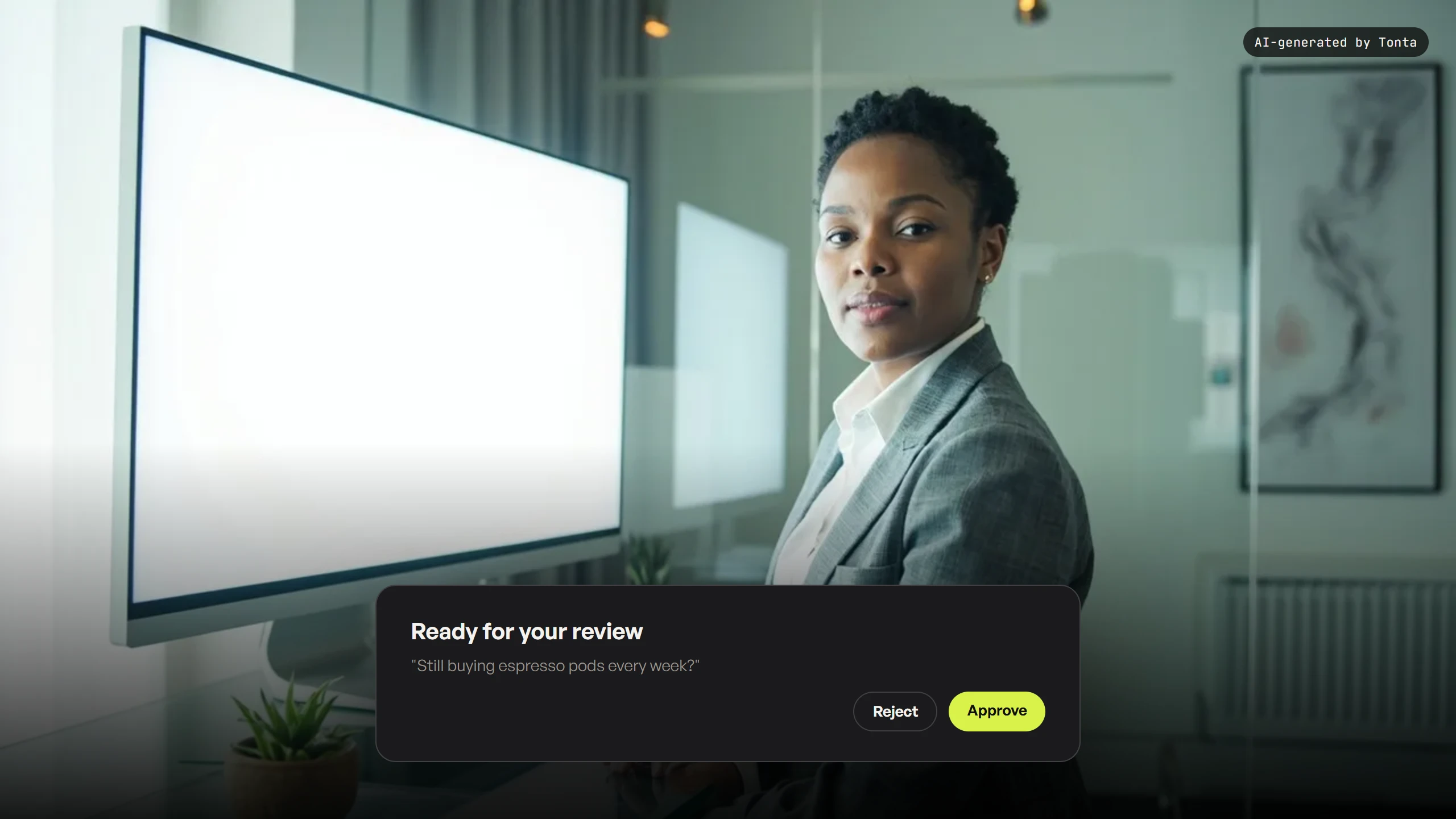
Review
No spendYou're looking at a real cut, not a preview promise. A shot that didn't hold up is flagged, not hidden — the same honesty you see in the showcase shows up here too.
No further spend during review. Ask for changes or approve — the hold only moves once you decide.
Ask to review the stills and the job stops after them, before any clip is made. Choose a candidate for each shot and it carries on.
At that stop you can change a still in words or inside a region you draw; each edit is quoted before it runs.
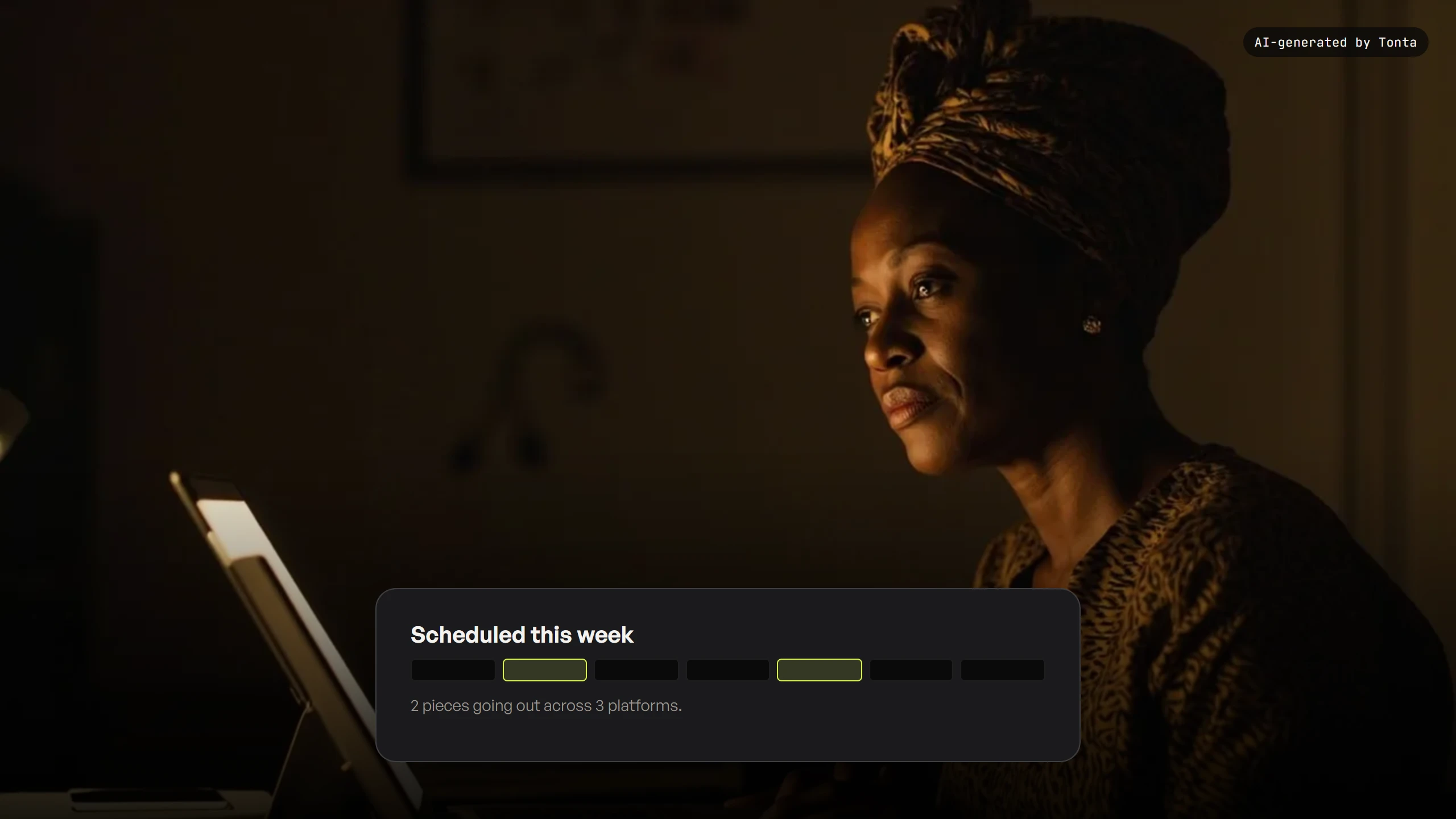
Publish
No spendSend it to a connected account with the AI disclosure on by default, or export it and take it anywhere. A platform-side edit — like a stripped link — is surfaced and confirmed, never applied silently.
Publishing itself doesn't meter further credit — the piece was already priced at generation.
Before it posts, a check explains what may hold the piece back on that platform. It never blocks a post and does not predict views.
On TikTok you can choose a trending sound, attached by TikTok's own sound id rather than mixed into your file.
Everything works one brand at a time
A brand carries its own references, connected accounts and settings, so a job for one never borrows another's. Money and access follow the same line.
- Credit can be held per brand. A job for a brand spends that brand’s own credit first, and it reaches the shared workspace pool only if you have allowed that for the brand.
- A guest funding link lets a client top up one brand without an account. The link pays into that brand only, expires, and can be revoked.
- Members can be limited to chosen brands, and a client role sees only the brands it is given.
See it on your own brief
Run a Preview first — a plan, a storyboard, an itemised quote and one watermarked low-res shot, before you buy any credit.